Friday, September 30, 2011

Splendor of the House of Orléans

A few images of the in-laws of King Leopold I. Above, we see Ferdinand-Philippe, the eldest son and heir of King Louis-Philippe who died in a dreadful carriage accident. Below are Ferdinand-Philippe's younger brother, Louis, Duc de Nemours, and his wife, Victoria of Saxe-Coburg-Koháry.
Two Victorias: the iconic British monarch (right) with her cousin, the wife of the Duc de Nemours.

Princess Clémentine, the youngest sister of Queen Louise-Marie of the Belgians. Apparently, while still a child, Clémentine's grace and dignity aroused the admiration of King Charles X of France, whose throne her father would later take. At a ball at the Palais Royal, the home of the Orléans family, the King is said to have remarked to Louis-Philippe, shortly before the July Revolution: "Were I thirty years younger, your daughter would be Queen of France." 

Thursday, September 29, 2011

The Faith of the Duc de Nemours

Here is a description of the second eldest brother of Queen Louise-Marie, Prince Louis, Duc de Nemours, who was once considered a candidate for the Belgian throne, prior to the choice of Leopold of Saxe-Coburg. According to the oral tradition of the Orléans family, his mother prayed, during his childhood, that he would become "another St. Louis".
The Duc de Nemours was the one who responded most of all to his mother's religious teaching. After his death his biographer, the academician, René Bazin, said, speaking of his noble life: "To what did he owe his unflinching pursuit of the ideal, his firmness and dignity in all vicissitudes? To his birth a little, but chiefly to his faith. His royal blood gave him the natural instinct to serve his country; the Catholic religion prevented his being deceived as to the best means of serving her, or from shrinking from the severity and duration of the service demanded. The Duc de Nemours was a believer, and acted up to his belief. He loved the ancient liturgy, the tradition and ritual of his church. He spoke little of his profoundest feelings, but he lived them, and they consoled him in the hour of death." (C. C. Dyson, The Life of Marie-Amélie last queen of the French, 1782-1866, 1910, p. 167)

Comments

I seem to be having trouble commenting on certain blogs which have comment boxes embedded below posts. Is anyone else experiencing similar problems?

Tuesday, September 27, 2011

Black and Gold

In contrast to the charming Dalton miniature of Queen Louise-Marie, we have this rather grim portrait of her husband, King Leopold I. I like the contrast between the black and the gold. The portrait also aptly conveys Leopold's melancholy in later life, as described by Charlotte Brontë in her novel, Villette, inspired by her experiences in Belgium:
Well do I recall that King—a man of fifty, a little bowed, a little gray ; there was no face in all that assembly which resembled his. I had never read, never been told anything of his nature or his habits : and at first the strong hieroglyphics graven as with iron stylet on his brow, round his eyes, beside his mouth, puzzled and baffled instinct. Ere long, however, if I did not know, at least I felt, the meaning of those characters written without hand. There sat a silent sufferer—a nervous, melancholy man...
Some might say it was the foreign crown pressing the King's brows which bent them to that peculiar and painful fold; some might quote the effects of early bereavement. Something there might be of both these, but these as embittered by that darkest foe of humanity—constitutional melancholy.

Sunday, September 25, 2011

Miniature of Queen Louise-Marie

Louise of Orleans Dalton 1840
Commissioned by Queen Victoria in 1840, this miniature watercolor on ivory is the work of Magdalena Dalton, née Ross. After Louise-Marie's death in 1850, King Leopold I wrote to his niece in an effort to locate the Ross miniature of his wife "with red ribbands in her hair". Victoria responded that the original was with Louise-Marie's mother, the former Queen of the French, Marie-Amélie. Listing several other copies, Victoria offered to help Leopold obtain one if he so desired. 

Victoria had worn a miniature of "Aunt Louise" in a bracelet even before meeting her for the first time in 1835. As I have mentioned before, the two queens were close. In her journal, Victoria described Louise-Marie as follows : "so kind & good; the more one sees her, the more one must love her; she is so thoroughly unselfish," adding that the Belgian queen was "the dearest friend, after my beloved Albert, I have." High praise, surely!

September 25, 1983: The Death of Leopold III

On September 25, 1983, Leopold III, King of the Belgians from 1934 to 1951, died suddenly, at the age of 81, after a heart operation at the Cliniques Universitaires Saint-Luc, in Woluwé-Saint-Lambert. His loss was a great grief to his family, particularly to his loyal wife, Princess Lilian, and to his beloved youngest daughter and confidante, Princess Esmeralda, who was only 26 at the time. Although his old enemies, the socialists, boycotted the ceremonies held in his honor, his death was also a deep sorrow to many of his people, especially his veterans, who had fought and suffered with him in World War II. 

By a sad coincidence, the King passed away only three months after his younger brother, Prince Charles, Regent of Belgium from 1944 to 1950, with whom he had never truly been reconciled since the tragic divisions of the Royal Question. Despite their long estrangement, Charles' death had deeply affected Leopold, as noted by Princess Esmeralda in a recent television documentary. For the first time since his abdication, he had returned to the Royal Palace, the scene of so many of the most painful memories of his troubled reign, to pay his last respects to Charles privately, at his lying-in-state. (Neither Leopold nor Lilian would attend Charles' state funeral; Alexandre and Esmeralda represented their father on this occasion). An aide-de-camp, Colonel Guy Weber, saw the King praying before his brother's bier, pale, deeply moved, his hands trembling. Leopold returned to Argenteuil sad and tired. The death of a younger family member also seems to have reminded him all the more keenly of his own mortality. Always an avid photographer, he took a picture of Alexandre and Esmeralda in mourning, explaining he wanted to be able to imagine how they would appear the day of his own funeral...

Only a few months later, Leopold would follow his brother into eternity. His widow, however, would survive him for nearly two decades, piously cultivating his memory at Argenteuil. Her passing, on June 7, 2002, exactly one year after publishing her husband's account of the crises of his reign, Pour l'Histoire, would signify the end of an era; in a sense, the closing of the chapter of the Royal Question.

Saturday, September 24, 2011

Elisabeth and Astrid

These are two of my favorite photographs of two of my favorite queens of all time, Elisabeth and Astrid of Belgium, who were mother-in-law and daughter-in-law. They had much in common. Both were devoted wives to their kings. Each had three children, two sons and a daughter. Each was charitable and beloved by the people. It is ironic, though, that Astrid became so much more popular than Elisabeth, since Elisabeth did much more for the country than Astrid was able to do in her short time as crown princess and queen.

Friday, September 23, 2011

Remembering the Saxe-Coburgs

Not to be morbid, but here are a few of my favorite tributes, from Find a Grave.
~Au courage incarné par le grand Roi que fut Albert I.
~A Léopold III, Roi incompris mais courageux. Reposez en paix.
~A Elisabeth, héroïque Reine des Belges pendant la I°Guerre Mondiale. Que Dieu lui accorde le repos éternel tant mérité.
~Au Roi Baudouin I, grand Roi et grand homme, personne généreuse possédant de rares qualités. Que son âme repose en paix pour l'éternité.
~A l'Impératrice Charlotte, Votre vie n'a été que souffrance puissiez Vous trouvez enfin le repos éternel dans la Paix du Christ.

Saturday, September 17, 2011

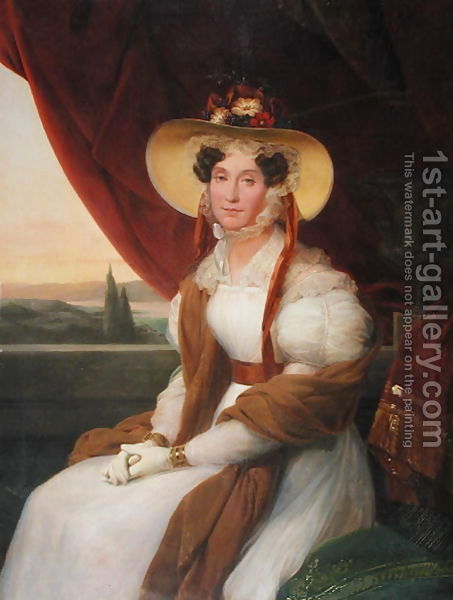
Madame Adélaïde, aunt of Queen Louise-Marie

Educated in liberal ideas by Mme. de Genlis, Adélaïde d'Orléans had made them her own. Long years of exile in a convent in Bremgarten, and afterwards with her aunt Mme. de Conti in Bavaria and Hungary, had separated her from family life. She knew little of her mother, and was subsequently altogether estranged from her, on account of the latter's subjugation by her chancellor, M. de Folmont. After their return to France, she concentrated all her affection on her brother and his family.
Her niece, the Queen of the Belgians, in a letter to Queen Victoria, says: "My good, excellent, beloved aunt lived only for her brother. Her devotion was absolute, and utterly unselfish. A heart so true, so noble, so loving is seldom found. She was a second mother to us, indeed few mothers do for their children all she did for us or love them better, and we in return loved and looked up to her". 
Mme. de Boigne says: "In Madame Adélaïde I always admired her extreme goodness of heart and great intellectual powers. Her good qualities were her own, her defects due to circumstances in which she was placed in youth". 
She was frank and sincere, and with her the inside was worth more than the outside. 
Exclusive in her affections, she was a firm friend but a bitter enemy. 
Her charities, however, left out no one. 
She gave away one-sixth of her income in pensions to poor artists and men of letters, to the widows and orphans of combatants in the July Revolution, and in subscriptions to schools and hospitals, for the families of shipwrecked mariners, or artisans out of work, to cholera patients; pensions also to faithful servants of the House of Orléans, and rendered assistance even to poor Jews. 
Her wealth and liberality gave her much influence, and she lived only for the aggrandisement of her brother and his family. 
Her father, Philippe Egalité had been kindness itself to her. She was too young to judge the facts and would not acknowledge that his path had been one of crime. In her days of exile and among the émigrés who formed her aunt, Mme. de Conti's court, she found herself everywhere looked upon coldly on account of the name she bore, so she was driven in upon herself and raised a rampart of reserve in self-defence. Her mother's household being unendurable, she left it and joined her brother, and having no one else upon whom to lavish her capacity for affection, she gave her heart wholly to him. 
He returned her affection, fell much under her influence, consulted her on all points, and having great respect for her powers of mind, deferred to her opinions. 
Their father's life and death were a bond of intimacy between them. 
Though both were generally the easiest of companions, upon this point they were irritable, even to rancour. After the Restoration neither of them was ever at ease with Louis XVIII, and least of all with the Duchesse d'Angoulême, daughter of Louis XVI, for whose death their father had voted. 
Madame Adélaïde indeed frankly detested the royal family. She may have remembered that in her youth she had been taught to look on the Duc d'Angoulême as her future husband, but the match fell through upon the determined opposition of Marie Antoinette. Again in later life there had been an idea of marrying her to the Duc de Berry, which also collapsed. 
Besides all this she was thoroughly at variance with the policy and opinions of the elder branch of the Bourbons; she despised their narrowness and bigotry, "they had learned nothing, and forgotten nothing". She herself was genuinely liberal and modern in her ideas, and she thought a constitutional Monarchy and representative Government was really what was needed for the welfare of France, and she loved her country only less than her brother. For him she was always ambitious. If he was not of the Orléanist faction, Mdme. Adélaïde certainly was; in and out of season she never lost sight of the ruling desire of her life, i.e. to see her brother on the throne of France. Her wealth gave her great influence. She spent it generously, patronised artists and literary men, and employed much labour on her estates, especially at Randan, which was her favourite residence; a whole countryside benefited by her benevolence and adored her, calling her "the good Mademoiselle"... (C. C. Dyson, The life of Marie-Amélie last queen of the French, 1782-1866, 1910, pp. 183-186)